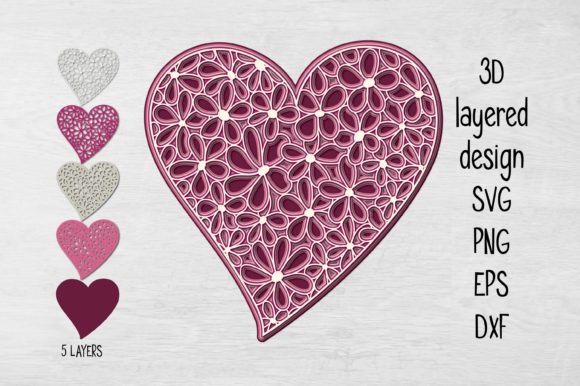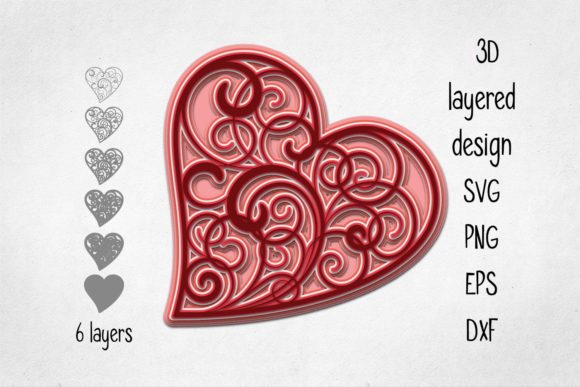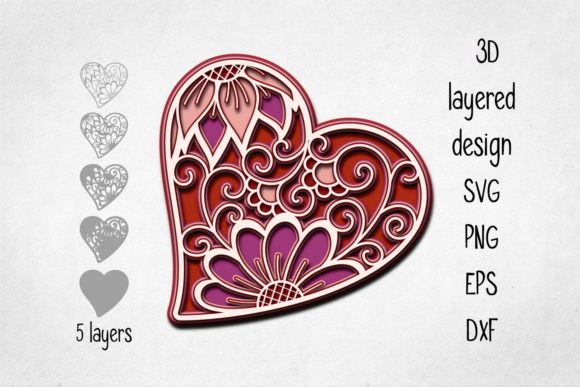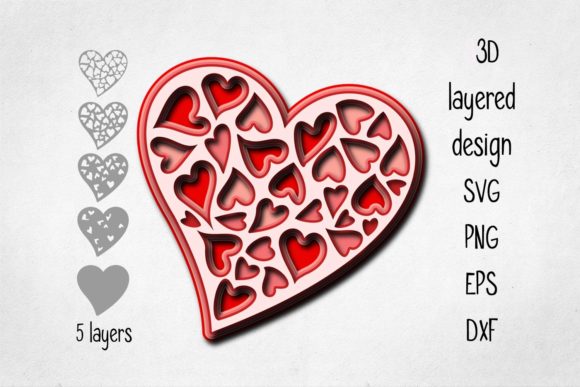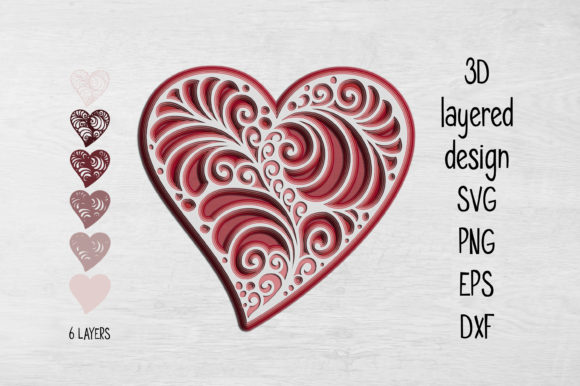
3D Multilayer Heart
The 3D Multilayer Heart represents a specific category of digital design assets optimized for depth and dimensionality. Unlike traditional flat vector graphics, this design is constructed using multiple distinct layers that, when assembled, create a three-dimensional effect. This structure allows creators to manipulate the visual weight and spatial presence of the heart motif, making it a versatile option for various crafting applications. The design is particularly suited for users who require precise control over the final aesthetic, as it can be deconstructed into individual components or utilized as a complete assembly.
Understanding the Design Architecture
At its core, the 3D Multilayer Heart consists of several concentric or stacked elements. These layers are designed to be cut from material sheets and arranged with spacers or direct contact to achieve the desired depth. A primary advantage of this format is modularity; the user is not restricted to using every single layer provided in the file. Depending on the intended scale of the project, one might choose to utilize all available layers for maximum volume or select only two or three layers for a more subtle profile. This flexibility extends to color customization, allowing for any combination of hues that aligns with personal taste or interior design schemes.
The physical construction relies heavily on the choice of substrate. While the digital file is universal, the tactile result depends on the material selected. Common recommendations include card stock for lightweight projects, wood or plywood for durable home decor, and plastic or MDF (Medium Density Fiberboard) for structural stability. Each material offers different cutting characteristics and finish options. For instance, wood provides a natural, rustic texture suitable for wall art, whereas card stock is ideal for greeting cards or small gift embellishments. The ability to resize the design is a significant feature, but it comes with technical caveats regarding the thickness of the cut lines.
Evaluating Material and Size Constraints
One of the most critical considerations when working with the 3D Multilayer Heart is the relationship between size and element thinness. The design includes intricate details that contribute to its dimensional quality. When scaling down the design significantly, these thin elements may become too fragile to cut cleanly or too difficult to handle during assembly. If the project involves very small dimensions, the structural integrity of the thinnest layers could be compromised, leading to breakage or poor alignment. Therefore, while resizing is supported, it requires careful evaluation of the minimum viable size for the specific machine and material being used.
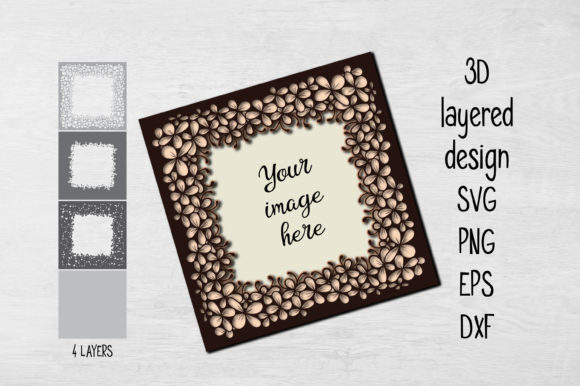
Compatibility with cutting machinery is another essential factor. Upon acquisition, the user receives a ZIP folder containing four distinct file formats: SVG, PNG, EPS, and DXF. These formats cater to different types of equipment and software environments. SVG files are widely compatible with modern cutting machines like Cricut and Silhouette, offering scalability without loss of quality. DXF files are standard for industrial laser cutters and CNC routers, ensuring precision in manufacturing settings. EPS files are often preferred by graphic designers for further editing in Adobe Illustrator before production. PNG serves as a raster reference, useful for visualizing the design but generally not for cutting operations. It is imperative that the user verifies their hardware supports at least one of these formats before proceeding with a purchase or download.
Applications in Home Decor and Gifting
The versatility of this design makes it a strong candidate for both functional home decor and sentimental gifting. In the context of interior design, the 3D Multilayer Heart can serve as a focal point for wall decor. By varying the spacing between layers and selecting contrasting colors, the piece can cast interesting shadows that change throughout the day, adding dynamic visual interest to a room. This depth creates a more engaging experience than a flat poster or print.
For givers, the customizable nature of the design allows for personalized touches. A parent might use red, white, and blue layers for a patriotic theme, while a partner might opt for pastel tones for a nursery. The option to omit layers means the design can be adapted to match existing furniture finishes or color palettes without requiring a complete redesign. Whether intended as a standalone statement piece or an accent on a larger project, the ability to combine materials—such as pairing a wooden base with a colorful paper top layer—adds to the creative potential.
Weighing Benefits Against Limitations
When evaluating whether to incorporate the 3D Multilayer Heart into a project, it is necessary to balance the benefits against the inherent tradeoffs. The primary benefit is the high degree of customization and the professional look achieved through layering. It eliminates the need to manually draw complex 3D structures, providing a pre-engineered solution that saves time and ensures geometric accuracy. Furthermore, the inclusion of multiple file formats reduces barriers to entry for users with different technological setups.
However, there are limitations to consider. The complexity of assembly increases compared to single-layer designs. Users must account for the time required to cut, separate, and stack each layer accurately. Misalignment during assembly can ruin the 3D effect, requiring patience and steady hands. Additionally, the cost of materials may be higher if using premium woods or thick plastics compared to simple paper crafts. The design may also present challenges for beginners who lack experience with multi-step assembly processes or those who do not own compatible cutting machines.
Determining Suitability for Your Needs
This design is a strong fit for individuals who prioritize custom aesthetics and have access to appropriate fabrication tools. It is particularly effective for hobbyists looking to expand their portfolio of layered artwork or professionals seeking unique decorative elements for client projects. If the goal is to create a lasting piece of wall art or a high-quality gift that stands out due to its craftsmanship, the 3D Multilayer Heart offers a robust foundation.
Conversely, alternatives may be worth considering for those with limited resources or specific constraints. If the project requires rapid mass production, a single-layer die-cut might be more efficient. For beginners with no cutting machine, purchasing a pre-made physical version might be more practical than navigating the technical aspects of file conversion and material selection. Similarly, if the project demands extreme portability or minimal weight, the added bulk of multiple layers might be undesirable.
In conclusion, the decision to use the 3D Multilayer Heart should be guided by a clear understanding of the intended application, available tools, and desired outcome. By carefully selecting materials, respecting size limitations, and utilizing the provided file formats correctly, creators can leverage this design to produce sophisticated and meaningful results. It remains a valuable asset for anyone seeking to add depth and personalization to their creative endeavors.